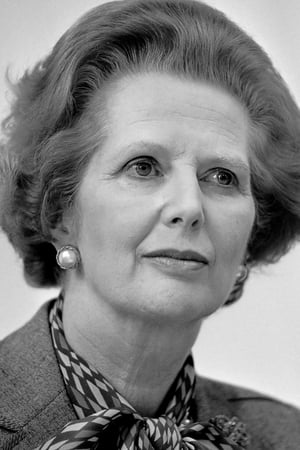
Margaret Thatcher
Born October 13, 1925 (Age: 100)
•
Grantham, Lincolnshire, England, UK
Biography
Margaret Hilda Thatcher, Baroness Thatcher, LG, OM, DStJ, PC, FRS, HonFRSC (née Roberts; 13 October 1925 – 8 April 2013) was a British stateswoman and Conservative politician who was Prime Minister of the United Kingdom from 1979 to 1990 and Leader of the Conservative Party from 1975 to 1990. She was the longest-serving British prime minister of the 20th century and the first woman to hold the position. As prime minister, she implemented economic policies known as Thatcherism. A Soviet journalist dubbed her the "Iron Lady", a nickname that became associated with her uncompromising politics and leadership style. Thatcher studied chemistry at Somerville College, Oxford, and worked briefly as a research chemist before becoming a barrister. She was elected Member of Parliament for Finchley in 1959. Edward Heath appointed her secretary of state for education and science in his 1970–1974 government. In 1975, she defeated Heath in the Conservative Party leadership election to become leader of the opposition, the first woman to lead a major political party in the UK. On becoming prime minister after winning the 1979 general election, Thatcher introduced a series of economic policies intended to reverse high inflation and Britain's struggles in the wake of the Winter of Discontent and an oncoming recession. Her political philosophy and economic policies emphasised greater individual liberty, the privatisation of state-owned companies, and reducing the power and influence of trade unions. Her popularity in her first years in office waned amid recession and rising unemployment. Victory in the 1982 Falklands War and the recovering economy brought a resurgence of support, resulting in her landslide re-election in 1983. She survived an assassination attempt by the Provisional IRA in the 1984 Brighton hotel bombing and achieved a political victory against the National Union of Mineworkers in the 1984–85 miners' strike. In 1986, Thatcher oversaw the deregulation of UK financial markets, leading to an economic boom, in what came to be known as the Big Bang. Thatcher was re-elected for a third term with another landslide in 1987, but her subsequent support for the Community Charge (also known as the "poll tax") was widely unpopular, and her increasingly Eurosceptic views on the European Community were not shared by others in her cabinet. She resigned as prime minister and party leader in 1990, after a challenge was launched to her leadership, and was succeeded by John Major, her chancellor of the Exchequer. After retiring from the Commons in 1992, she was given a life peerage as Baroness Thatcher (of Kesteven in the County of Lincolnshire) which entitled her to sit in the House of Lords. In 2013, she died of a stroke at the Ritz Hotel, London, at the age of 87. A polarising figure in British politics, Thatcher is nonetheless viewed favourably in historical rankings and public opinion of British prime ministers. Her tenure constituted a realignment towards neoliberal policies in Britain; the complex legacy attributed to this shift continues to be debated into the 21st century.
Margaret Hilda Thatcher, Baroness Thatcher, LG, OM, DStJ, PC, FRS, HonFRSC (née Roberts; 13 October 1925 – 8 April 2013) was a British stateswoman and Conservative politician who was Prime Minister of the United Kingdom from 1979 to 1990 and Leader of the Conservative Party from 1975 to 1990. She was the longest-serving British prime minister of the 20th century and the first woman to hold the position. As prime minister, she implemented economic policies known as Thatcherism. A Soviet journalist dubbed her the "Iron Lady", a nickname that became associated with her uncompromising politics and leadership style.
Thatcher studied chemistry at Somerville College, Oxford, and worked briefly as a research chemist before becoming a barrister. She was elected Member of Parliament for Finchley in 1959. Edward Heath appointed her secretary of state for education and science in his 1970–1974 government. In 1975, she defeated Heath in the Conservative Party leadership election to become leader of the opposition, the first woman to lead a major political party in the UK.
On becoming prime minister after winning the 1979 general election, Thatcher introduced a series of economic policies intended to reverse high inflation and Britain's struggles in the wake of the Winter of Discontent and an oncoming recession. Her political philosophy and economic policies emphasised greater individual liberty, the privatisation of state-owned companies, and reducing the power and influence of trade unions. Her popularity in her first years in office waned amid recession and rising unemployment. Victory in the 1982 Falklands War and the recovering economy brought a resurgence of support, resulting in her landslide re-election in 1983. She survived an assassination attempt by the Provisional IRA in the 1984 Brighton hotel bombing and achieved a political victory against the National Union of Mineworkers in the 1984–85 miners' strike. In 1986, Thatcher oversaw the deregulation of UK financial markets, leading to an economic boom, in what came to be known as the Big Bang.
Thatcher was re-elected for a third term with another landslide in 1987, but her subsequent support for the Community Charge (also known as the "poll tax") was widely unpopular, and her increasingly Eurosceptic views on the European Community were not shared by others in her cabinet. She resigned as prime minister and party leader in 1990, after a challenge was launched to her leadership, and was succeeded by John Major, her chancellor of the Exchequer. After retiring from the Commons in 1992, she was given a life peerage as Baroness Thatcher (of Kesteven in the County of Lincolnshire) which entitled her to sit in the House of Lords. In 2013, she died of a stroke at the Ritz Hotel, London, at the age of 87.
A polarising figure in British politics, Thatcher is nonetheless viewed favourably in historical rankings and public opinion of British prime ministers. Her tenure constituted a realignment towards neoliberal policies in Britain; the complex legacy attributed to this shift continues to be debated into the 21st century.
Read more
Filmography
Kenny Dalglish
2025
•
as Self (archive footage)
•
Age: 100
Margaret Thatcher: Serving the Crown
2022
•
as Self
•
Age: 96
Prelúdio
2022
•
as Self (archive footage)
•
Age: 96
Meeting Gorbachev
2019
•
as Self (archive Footage)
•
Age: 93
Laissez-faire
2015
•
as Self (archive footage)
•
Age: 89

How to Win the TV Debate
2010
•
as Self (archive footage)
•
Age: 84
Margaret Thatcher, l'enfance d'un chef
2007
•
as Self
•
Age: 82
How to Be an Ex-Prime Minister
2007
•
as Self
•
Age: 81
Best Ever Spitting Image
2006
•
as Self (archive footage)
•
Age: 80

The Dark Side of Porn: The Real Animal Farm
2006
•
as (archive footage)
•
Age: 80
Remembering Reagan at His Ranch
2004
•
as Self (archive footage)
•
Age: 78
In Search of Tony Blair
2004
•
as Self (Archive Footage)
•
Age: 78

The Downing Street Patient
2004
•
as Self (archive footage)
•
Age: 78

Cabinet Confidential
2001
•
as Self
•
Age: 76

Reagan
1998
•
as Self
•
Age: 72
Degeneration Punk
1997
•
as
•
Age: 71
How to Be Prime Minister
1996
•
as Self
•
Age: 70
Satans mördare
1995
•
as Self
•
Age: 69

Westminster's Secret Service
1995
•
as Self (Archive Footage)
•
Age: 69

The Falklands War: The Untold Story
1987
•
as Self (archive footage)
•
Age: 61
The Englishwoman's Wardrobe
1986
•
as Self
•
Age: 61

Rockin' Ronnie
1986
•
as Self (archive footage)
•
Age: 60

To Kill the Cabinet
1986
•
as Self (archive footage)
•
Age: 60

Rude Boy
1980
•
as Self
•
Age: 54