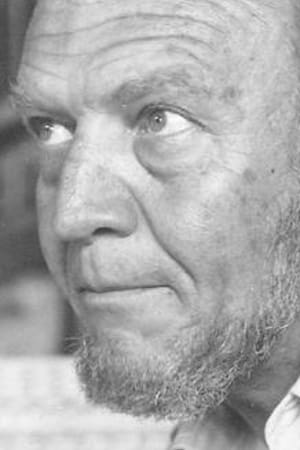
Max Kerlow
Born March 03, 1928 (Age: 98)
•
Mexico City, Mexico
Biography
Prolific Mexican actor with more than 100 films in his filmography. His first intention was to be a painter. However, life would take him on other paths and his incursion into the world of the arts would be as an architect, a career he studied at the suggestion of a cousin just out of school, given his interest in painting, and from which he graduated from the National Autonomous University of Mexico in 1954. Shortly after, he dedicated himself to promoting crafts with artists such as Manuel Felguérez and Felipe Ehrenberg, one of his first assistants. With Felguérez he devised a different line of ceramics and with Ehrenberg he invented a technique for painting on amate paper, which he later taught to indigenous people in the facilities of his café-gallery La Amargura, located on the street of the same name in the San Ángel neighborhood. As a painter he only mounted one exhibition, although every day he drew and made caricatures from the news in the newspapers: "One ends up with more or less possibilities of doing what one wanted, although, as Picasso said, at this age is when one has more desire to do things; I feel that one understands them better, knows better what one wants to do, but it is already too late," he acknowledges in the documentary by Carolina Kerlow. However, it would be in the acting facet in which he would stand out the most and which would give Max Kerlow the most satisfaction. He began his career in Mexican cinema in 1963 under the direction of Juan José Gurrola in Confesión de Stavroguin. A friend of directors such as Paul Leduc, Felipe Cazals and Arturo Ripstein, it was natural for him to be invited to participate in their films, although Max Kerlow assured that he always liked acting: "I was invited to parties sometimes just to tell jokes; I have my diploma as a joke teller". He was also a magician. He was even able to combine his interests: "When Miguel Littin said "we are going to Chihuahua to film Actas de Marusia (1976), I took the opportunity to bring my catalogs and sold my crafts very well". And he was not just any actor making any movie. His film performances are proof of his histrionic quality. He participated in Las Poquianchis (1976), El apando (Felipe Cazals / 1976), Fox Trot (Arturo Ripstein / 1976); Frida, naturaleza viva (Paul Leduc / 1983), where he played the role of Leon Trotsky, Cabeza de Vaca (Nicolas Echevarria / 1991); Cómodas mensualidades (Julian Pastor / 1992); Kino (Felipe Cazals / 1993); De noche vienes Esmeralda (Jaime Humberto Hermosillo / 1997); La hija del caníbal o Lucía, Lucía (Antonio Serrano / 2003), Morirse está en hebreo (Alejandro Springall / 2007); Cinco días sin Nora (Mariana Chenillo, 2008). In 1998 he won the Ariel Award for best male co-acting for his performance in Por si no te vuelvo a ver (Juan Pablo Villaseñor, 1997), debut film of the Centro de Capacitación Cinematográfica (CCC). In the Italian film Mediterráneo (1991), directed by Gabriele Salvatores, winner of the Oscar for best foreign film, Max Kerlow had a leading role. He also participated in documentaries and commercials.
Prolific Mexican actor with more than 100 films in his filmography.
His first intention was to be a painter. However, life would take him on other paths and his incursion into the world of the arts would be as an architect, a career he studied at the suggestion of a cousin just out of school, given his interest in painting, and from which he graduated from the National Autonomous University of Mexico in 1954. Shortly after, he dedicated himself to promoting crafts with artists such as Manuel Felguérez and Felipe Ehrenberg, one of his first assistants. With Felguérez he devised a different line of ceramics and with Ehrenberg he invented a technique for painting on amate paper, which he later taught to indigenous people in the facilities of his café-gallery La Amargura, located on the street of the same name in the San Ángel neighborhood.
As a painter he only mounted one exhibition, although every day he drew and made caricatures from the news in the newspapers: "One ends up with more or less possibilities of doing what one wanted, although, as Picasso said, at this age is when one has more desire to do things; I feel that one understands them better, knows better what one wants to do, but it is already too late," he acknowledges in the documentary by Carolina Kerlow.
However, it would be in the acting facet in which he would stand out the most and which would give Max Kerlow the most satisfaction.
He began his career in Mexican cinema in 1963 under the direction of Juan José Gurrola in Confesión de Stavroguin.
A friend of directors such as Paul Leduc, Felipe Cazals and Arturo Ripstein, it was natural for him to be invited to participate in their films, although Max Kerlow assured that he always liked acting: "I was invited to parties sometimes just to tell jokes; I have my diploma as a joke teller". He was also a magician. He was even able to combine his interests: "When Miguel Littin said "we are going to Chihuahua to film Actas de Marusia (1976), I took the opportunity to bring my catalogs and sold my crafts very well".
And he was not just any actor making any movie. His film performances are proof of his histrionic quality. He participated in Las Poquianchis (1976), El apando (Felipe Cazals / 1976), Fox Trot (Arturo Ripstein / 1976); Frida, naturaleza viva (Paul Leduc / 1983), where he played the role of Leon Trotsky, Cabeza de Vaca (Nicolas Echevarria / 1991); Cómodas mensualidades (Julian Pastor / 1992); Kino (Felipe Cazals / 1993); De noche vienes Esmeralda (Jaime Humberto Hermosillo / 1997); La hija del caníbal o Lucía, Lucía (Antonio Serrano / 2003), Morirse está en hebreo (Alejandro Springall / 2007); Cinco días sin Nora (Mariana Chenillo, 2008).
In 1998 he won the Ariel Award for best male co-acting for his performance in Por si no te vuelvo a ver (Juan Pablo Villaseñor, 1997), debut film of the Centro de Capacitación Cinematográfica (CCC).
In the Italian film Mediterráneo (1991), directed by Gabriele Salvatores, winner of the Oscar for best foreign film, Max Kerlow had a leading role. He also participated in documentaries and commercials.
Read more
Filmography
One Hundred Years with Juan Rulfo
2017
•
as Self
•
Age: 89
Espíritu deportivo
2004
•
as Corsario Moreno
•
Age: 76
I Murder Seriously
2002
•
as Don Eulalio
•
Age: 74
Moctezuma's Revenge
2002
•
as Sr. Malverde
•
Age: 73
Compassionate Sex
2000
•
as Vendedor de colmado
•
Age: 72
Luces de la noche
1998
•
as Engineer Klein
•
Age: 70
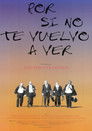
If I Never See You Again
1997
•
as Gonzalo
•
Age: 69
Esmeralda Comes by Night
1997
•
as Priest in hospital
•
Age: 69

Sex Education In Brief Lessons
1997
•
as
•
Age: 69
No Image
Bodas Negras
1994
•
as
•
Age: 66
Kino: The Legend of the Black Priest
1993
•
as Italian Superior Priest
•
Age: 65
Cómodas mensualidades
1992
•
as
•
Age: 63
Juegos nocturnos
1992
•
as
•
Age: 63
Cabeza de Vaca
1991
•
as Man in armor
•
Age: 63
Bandidos
1991
•
as Sacerdote
•
Age: 63
Dentro de la noche
1991
•
as
•
Age: 62
Las buenas costumbres
1990
•
as Félix Morin
•
Age: 61
No Image
El cielo subterraneo
1988
•
as
•
Age: 59
Pasa en las mejores familias
1987
•
as
•
Age: 58
Macho y hembras
1987
•
as
•
Age: 58
Cuentos de Principes y Princesas
1981
•
as
•
Age: 52
En Defensa Propia
1978
•
as
•
Age: 50
Naufragio
1978
•
as Marino III
•
Age: 50
The Bees
1978
•
as Representative at the United Nations - U.S.S.R.
•
Age: 50
Three Stories of Love
1978
•
as
•
Age: 49
Those Years
1974
•
as Von Thun
•
Age: 46
The Prophet Mimi
1973
•
as Don Paco
•
Age: 45
I Escaped from Devil's Island
1973
•
as Pelliserre
•
Age: 45

The Mansion of Madness
1973
•
as Dr. Maillard
•
Age: 45
Aunt Isabel's Garden
1972
•
as
•
Age: 44
Reed: Insurgent Mexico
1972
•
as Antonio Swafeyta
•
Age: 43
The Apple of Discord
1968
•
as
•
Age: 40