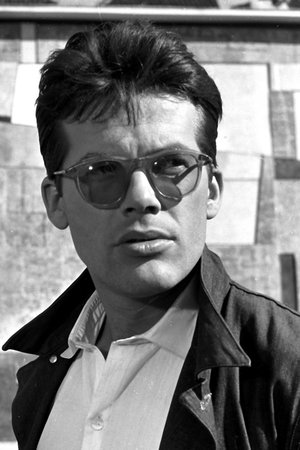
Zbigniew Cybulski
Born November 03, 1927 (Age: 98)
•
Kniaże, Polska
Biography
From Wikipedia, the free encyclopedia Zbigniew Cybulski Polish pronunciation: [ˈzbiɡɲɛf t͡sɨˈbulskʲi] (November 3, 1927 – January 8, 1967) was a Polish actor, one of the best-known and most popular personalities of the post-World War II history of Poland. Zbigniew Cybulski was born November 3, 1927 in a small village of Kniaże near Śniatyń, Poland (now a part of Sniatyn Raion, Ivano-Frankivsk Oblast, Ukraine). After World War II he joined the Theatre Academy in Kraków. He graduated in 1953 and moved to Gdańsk, where he made his stage debut in Leon Schiller's Wybrzeże Theatre. Also, with his friend Bogumił Kobiela, Cybulski founded a famous student theatre, the Bim-Bom. In the early 1960s, Cybulski moved to Warsaw, where he shortly joined the Kabaret Wagabunda. He also appeared on stage at the Ateneum Theatre, one of the most modern and least conservative Warsaw-based theatres of the epoch. However, Cybulski is best remembered as a screen actor. He first appeared in a 1954 film Kariera as an extra. His first major role came in 1958, when he played in Kazimierz Kutz's Krzyż Walecznych. The same year he also appeared as one of the main characters in Andrzej Wajda's Ashes and Diamonds and Aleksander Ford's The Eighth Day of the Week based on a short story by Marek Hłasko. From then on Cybulski was seen as one of the most notable actors of the Polish Film School and one of the "young and wrathful", as his generation of actors were called at the time. His most famous films, apart from Ashes and Diamonds, include Wojciech Has' The Saragossa Manuscript. He also acted in numerous television plays, including some based on works by Truman Capote, Anton Chekhov and Jerzy Andrzejewski. Cybulski died in an accident at a Wrocław Główny railway station on January 8, 1967, on his way from the film set. As he jumped on the speeding train (as he often did), he slipped on the steps, fell under the train, and was run over. Before the accident he said goodbye to Marlene Dietrich, a personal friend of his, who was a passenger on the train. He was buried in Katowice.
From Wikipedia, the free encyclopedia
Zbigniew Cybulski Polish pronunciation: [ˈzbiɡɲɛf t͡sɨˈbulskʲi] (November 3, 1927 – January 8, 1967) was a Polish actor, one of the best-known and most popular personalities of the post-World War II history of Poland.
Zbigniew Cybulski was born November 3, 1927 in a small village of Kniaże near Śniatyń, Poland (now a part of Sniatyn Raion, Ivano-Frankivsk Oblast, Ukraine). After World War II he joined the Theatre Academy in Kraków. He graduated in 1953 and moved to Gdańsk, where he made his stage debut in Leon Schiller's Wybrzeże Theatre. Also, with his friend Bogumił Kobiela, Cybulski founded a famous student theatre, the Bim-Bom. In the early 1960s, Cybulski moved to Warsaw, where he shortly joined the Kabaret Wagabunda. He also appeared on stage at the Ateneum Theatre, one of the most modern and least conservative Warsaw-based theatres of the epoch.
However, Cybulski is best remembered as a screen actor. He first appeared in a 1954 film Kariera as an extra. His first major role came in 1958, when he played in Kazimierz Kutz's Krzyż Walecznych. The same year he also appeared as one of the main characters in Andrzej Wajda's Ashes and Diamonds and Aleksander Ford's The Eighth Day of the Week based on a short story by Marek Hłasko. From then on Cybulski was seen as one of the most notable actors of the Polish Film School and one of the "young and wrathful", as his generation of actors were called at the time.
His most famous films, apart from Ashes and Diamonds, include Wojciech Has' The Saragossa Manuscript. He also acted in numerous television plays, including some based on works by Truman Capote, Anton Chekhov and Jerzy Andrzejewski.
Cybulski died in an accident at a Wrocław Główny railway station on January 8, 1967, on his way from the film set. As he jumped on the speeding train (as he often did), he slipped on the steps, fell under the train, and was run over. Before the accident he said goodbye to Marlene Dietrich, a personal friend of his, who was a passenger on the train. He was buried in Katowice.
Read more
Filmography
No Image
Piękny dwudziestoletni
1986
•
as (archive footage) (uncredited)
•
Age: 58
No Image
Zbyszek
1969
•
as Self (archive footage)
•
Age: 42
Alone in the City
1965
•
as Konrad Ferenc
•
Age: 38
Salto
1965
•
as Kowalski Malinowski
•
Age: 37

Penguin
1965
•
as Łukasz
•
Age: 37
No Image
To Love
1964
•
as Fredrik
•
Age: 37

Giuseppe in Warsaw
1964
•
as Staszek
•
Age: 36
No More Divorces
1964
•
as Gruszka (Segment 3)
•
Age: 36
Silence
1963
•
as Roman
•
Age: 35
The Criminal and the Lady
1963
•
as Jan Ziętek
•
Age: 35
Their Everyday Life
1963
•
as Andrzej Siennicki
•
Age: 35

How to Be Loved
1963
•
as Wiktor Rawicz
•
Age: 35

The Doll
1962
•
as Colonel Octavio Prado Roth / Cotal, the rebel
•
Age: 35
Spóźnieni przechodnie
1962
•
as Himself (segment 5)
•
Age: 34

Love at Twenty
1962
•
as Zbyszek (segment "Warszawa")
•
Age: 34
No Image
Thé a la menthe
1962
•
as
•
Age: 34
Goodbye to the Past
1961
•
as Famous actor
•
Age: 33

Innocent Sorcerers
1960
•
as Edmund
•
Age: 33
Good Bye, Till Tomorrow
1960
•
as Jacek
•
Age: 32
Night Train
1959
•
as Staszek
•
Age: 31
Cross of Valor
1959
•
as Tadeusz Więcek
•
Age: 31

Ashes and Diamonds
1958
•
as Maciek Chełmicki
•
Age: 30
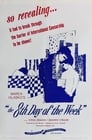
The Eighth Day of the Week
1958
•
as Piotr Terlecki
•
Age: 30
Tajemnica dzikiego szybu
1956
•
as Miner (uncredited)
•
Age: 28
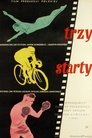
Trzy starty
1955
•
as Mietek Leśniak
•
Age: 27
No Image
Career
1955
•
as Bus Passenger (uncredited)
•
Age: 27

A Generation
1955
•
as Kostek
•
Age: 27